
Rewilding France has discovered two young local photographers with remarkable talent. Meet them.
⏱️7-8 minutes
The Dauphiné Alps provide a fertile playground for the imaginations of Elie and Maël, two budding talents aged 11 and 14 whom Rewilding France met to discuss their unique journey—for these two kids caught the bug early on, first for nature and then for photography.
A Self-Taught Journey
Rewilding offers a fresh, optimistic perspective on the living world around us, and meeting these two brothers is a breath of fresh air The two boys have been hooked on nature since they were very young. Not really because of their parents, who see nature mainly as a reason to go hiking. No. If we had to explain their intimate connection to nature, we might say it’s their closeness to living things that instilled this passion for the wild in them. Living in the heart of nature, near the Col de la Chaudière in the Diois region, their parents have indeed passed on a beautiful natural heritage to them.
Maël, the oldest of the boys, was first drawn to mammals, before gradually shifting his passion to birds, whose rich diversity he has been exploring for the past four years. He and his brother are teaching themselves. They buy nature guides, read them, and gradually learn about the species they encounter.
A Fresh Perspective
And for their age, the least one can say is that they observe nature with a keen eye. While hiking in the Pyrenees last summer, Elie and Maël noticed that dung beetles die when they come into contact with cow dung. The insects were on their backs, dying. When they tried to help them back up by turning them right side up, the dung beetles walked slowly and eventually rolled over again, nearly dead. When we described our project to restore natural grazing on a site near their home—by limiting veterinary treatments on rewilded horses and cattle—they immediately understood the value of it, particularly in producing dung that benefits dung beetles and other coprophagous insects.
Between the Eye and the Lens: An Objective View
When it comes to equipment, the two boys do with what they have: at their age, resourcefulness is key. Since their mother had an old camera that belonged to their grandfather, Maël started out with an 18-55mm lens, which he soon found too limited for wildlife photography. So his mother buys him a 70-300 mm lens—not perfect, certainly, but much better suited to his needs. His stepmother will buy him a new camera body a little later, allowing Elie to take over the family camera. They now dream of a 150-600 mm lens.
While Elie and Maël are well-equipped, their photographer’s eye never takes precedence over their appetite for the present moment. They look first to admire, before reaching for their camera to capture these moments of grace.
This passion for nature guides their artistic choices. Photography allows them to document all their encounters. It chronicles their “adventures” and shows them the breadth of all possible encounters.
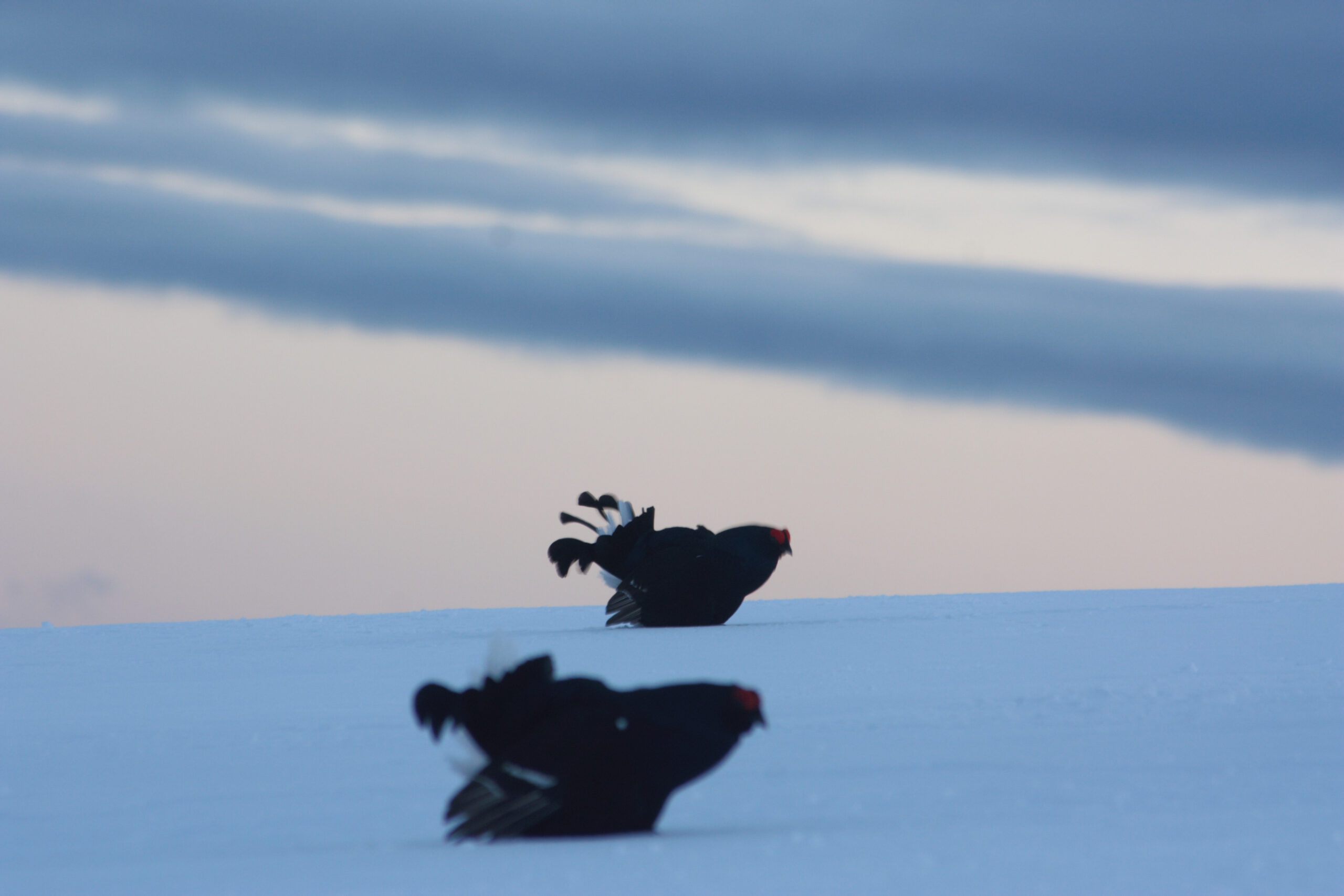
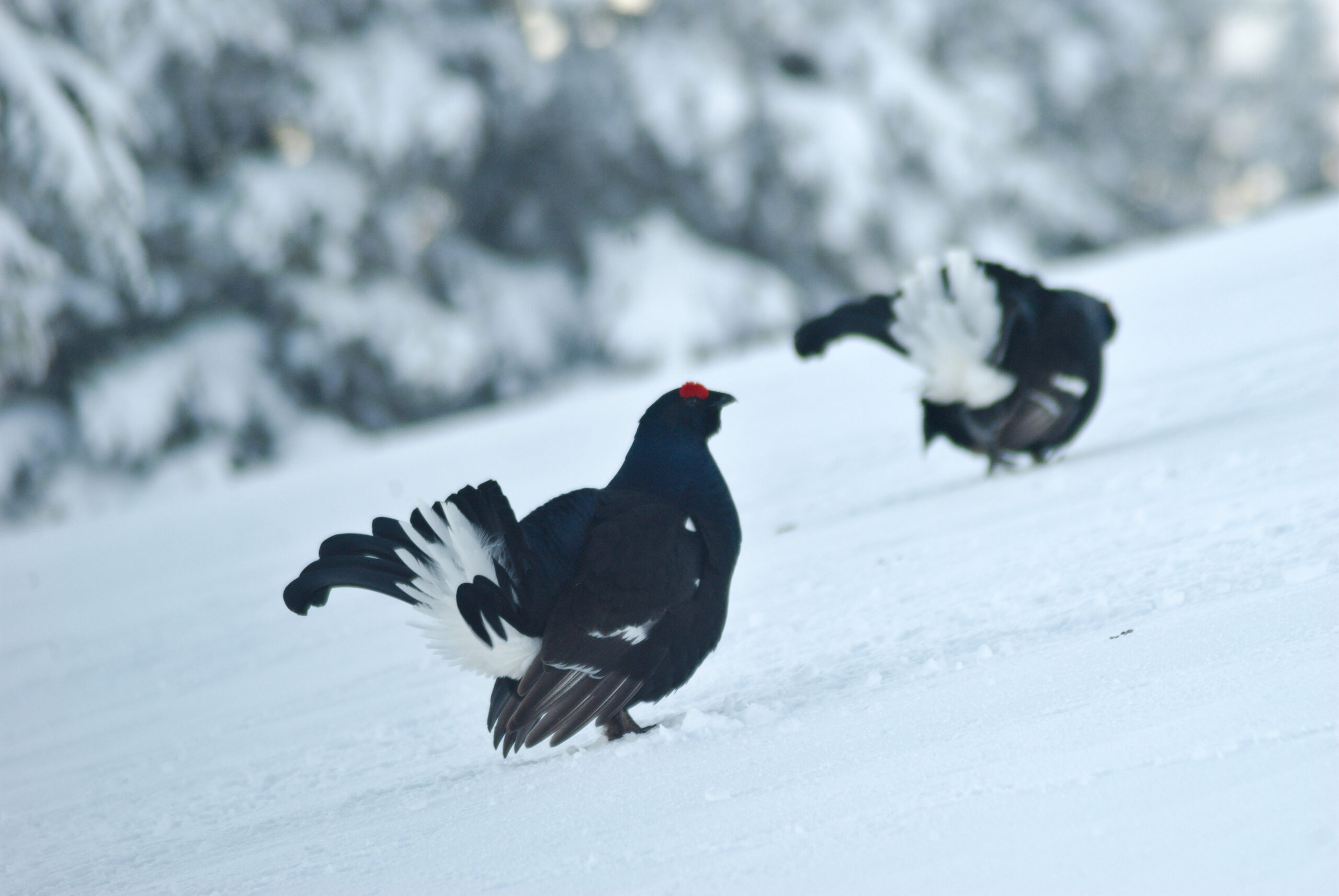
The Story Behind the Black Grouse Photos
Encountering black grouse remains by far their most memorable experience. They woke up at 2 a.m. to set out on a two-hour hike, hoping to reach the Vercors highlands before the black grouses, which are usually there between 5 and 7 a.m. The snow slowed their progress and forced them to quickly set up their hide tent. Their movements are swift; the tripods are hastily adjusted, and the camera bodies are pulled out along with the lenses, which they screw on in a hurried motion. Time is a crucial ally in photography, as the photographer must always maintain that slight head start that allows them to capture the atmosphere of the place and blend in (at least a little) with the surroundings. Elie and Maël are well aware of this. They speak of their memory with emotion in their voices and stars in their eyes, with the satisfaction of having their own reward: a moment shared with wildlife.
In a field with an unobstructed horizon, the black grouse pops up. In the midst of the breeding season, at the end of winter, the black grouse allows itself to be easily observed through the lens of the two boys, standing there, a few meters away, capturing the red of their crests piercing the dawn light of the first rays of the sun.
The owly sulphur, the Manta Ray of the Diois
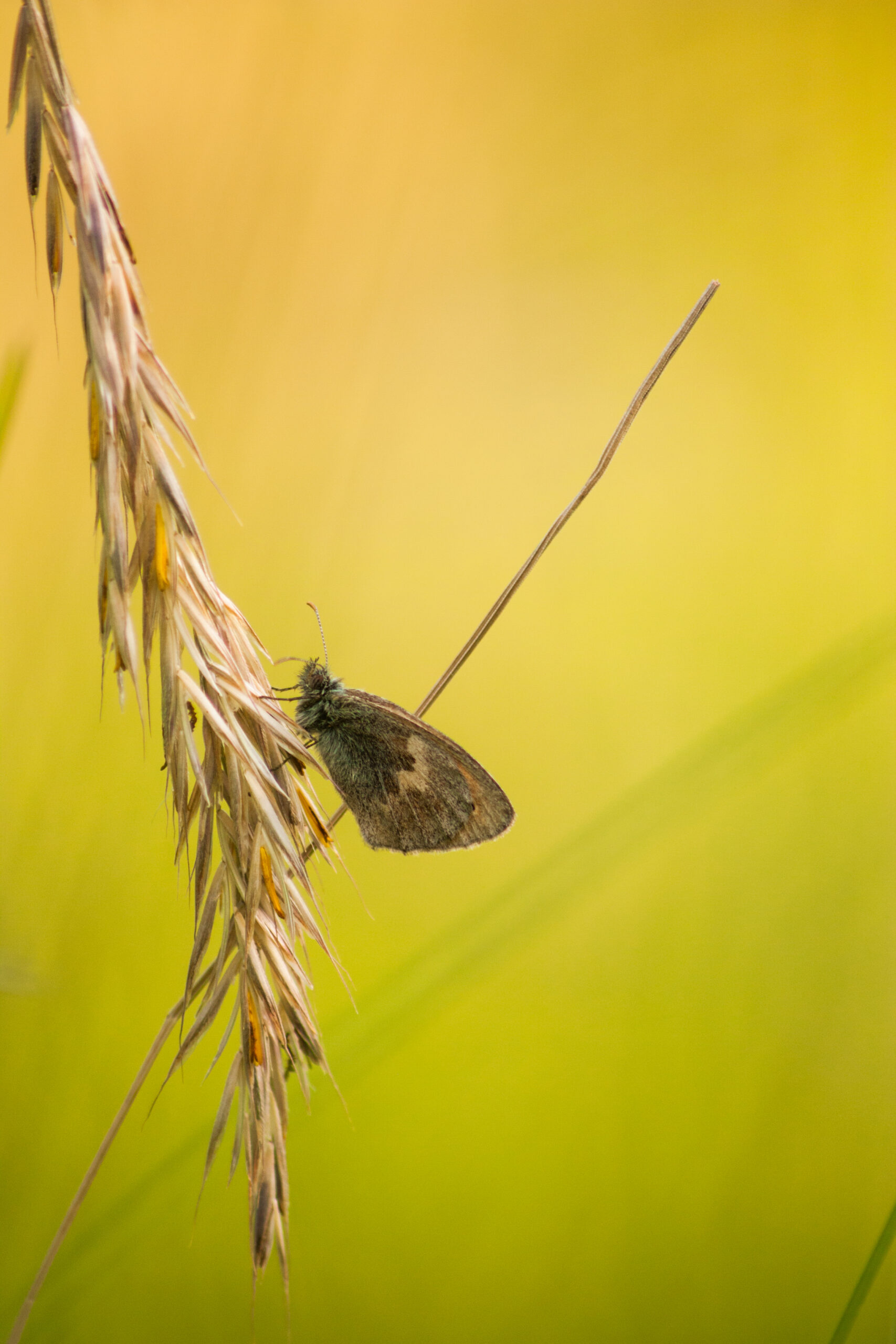
Our conversation wraps up with this seemingly ordinary photograph, with its warm colors. Maël explains that this is the owly sulphur, an insect found in the spring and summer in the fields of dry grass in the Diois. Their captivated gazes see in this insect more than just a dragonfly or a butterfly, as the owly sulphur is neither truly one nor entirely the other. It’s a manta ray, Maël suggests, as it undulates through the air with the grace of a swimmer. In fact, he was only able to capture this moment by waiting for the insect to land on a blade of grass, and then waiting to have a 150-600mm lens to capture the dance of its flight…
Written by Aurélien Giraud
Rewilding France
